







Istanbul Travel Questions
Plan your time in Istanbul. Find answers about sights, hotel areas, Bosphorus cruises, food and getting around.
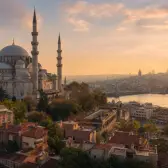
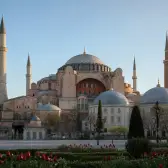
The old city holds four of them within a fifteen minute walk: Hagia Sophia, the Blue Mosque, Topkapi Palace and the Basilica Cistern. Between them they cover Byzantine Constantinople and Ottoman Istanbul, which is most of what people come for.
Topkapi is the one that needs time. The Harem is a separate section inside it, it is included on our Topkapi visits, and it is the part most people remember.
Then the Grand Bazaar and the Spice Bazaar, and a Bosphorus cruise, which is the essential way to understand the layout of the city from the water.
Beyond the standard list: Suleymaniye Mosque, emptier and finer than the Blue Mosque; the Chora Church for its mosaics; and the Prince's Islands if you have a spare day and want to leave the traffic behind.
The city tours are under Istanbul tours.
Similar questions
Three full days is the honest minimum. Two gets you the old city and not much else, and Istanbul is not a city that fits inside the old city.
Three days lets you spend one on the historic peninsula, one on the Bosphorus and the newer districts, and one on the bazaars, a mosque or two, and whatever you found in the first two days that you want more of.
With four or five days, you have time for the Asian side, the Prince's Islands and the Chora Church without having to give up the other main visits.
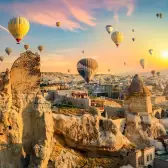
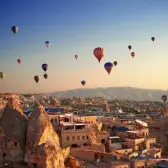
If your trip also takes in Cappadocia and the Aegean, three days here is the right balance. The rest of the country repays the days you would have spent in the city.
Similar questions
Sultanahmet if this is your first visit. You can walk to Hagia Sophia, the Blue Mosque, Topkapi and the Basilica Cistern, which takes the city's traffic out of your holiday entirely. It is quiet at night, and it is not where locals eat.
Choose Beyoglu, around Galata and Istiklal, for restaurants, bars and a closer look at everyday city life. The old city is fifteen minutes away by tram.
Karakoy and Besiktas sit between the two, on the water, with good food and easy ferries.
Where our tours include Istanbul hotels, they are chosen for the walk to the sites and the next morning's pickup rather than for the address alone. If a particular district matters to you, tell us when you book.
Similar questions
There are three main kinds of cruise or ferry trip, and each offers a different experience.
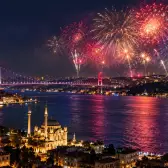
The short cruise runs about two hours, up the European shore and back, and it is the one included in most city tours. It shows you the palaces, the wooden mansions and both bridges, and it is enough for most visitors.
The full day cruise goes to the mouth of the Black Sea and stops for lunch at a fishing village under a castle. It takes the whole day and it is a different thing: less sightseeing, more being on the water.
The public ferry is the cheapest, costs the price of a transport card, and is what locals use. No commentary, no guide, and a great deal of charm.
A tour will never put two Bosphorus cruises into the same trip. If your itinerary has one, that is the one.
Similar questions
Yes, if you have the days. Kadikoy is where Istanbul eats: a food market, streets of small restaurants, bookshops and bars, and almost no tour groups.
Uskudar offers a quieter, more conservative atmosphere on the Asian side, with fine Ottoman mosques and the best view back at the old city skyline at sunset.
The ferry across takes twenty minutes and costs almost nothing, and the crossing itself is one of the good things about the city.
On a three day first visit, the Asian side is the thing to leave out. On a longer stay it is what makes Istanbul feel like a place rather than a set of monuments.
Similar questions
Decide what you want, and roughly what it is worth, before you walk in. The Grand Bazaar has around 4,000 shops and the first price is usually a starting point for bargaining, rather than a fixed price.
Bargaining is expected and it is not a fight. Ask the price, offer somewhat less than you are willing to pay, and settle in the middle. Walking away is a normal part of it and often produces a better number before you reach the door.
Gold and silver are sold by weight at a posted rate, so there is less to negotiate. Carpets, leather and ceramics are where the spread is widest and where knowing a fair price matters most.
Ask your guide before you go. They know which shops are honest and they are not paid a commission by any of them.
Similar questions
A half day covers one area, usually the old city monuments or a Bosphorus cruise with a bazaar, and finishes around lunchtime. No meal is included.
A full day covers both halves with lunch between them and finishes in the late afternoon. It costs more and it saves you a day, which on a short trip is the point.
Half days suit travellers who want an afternoon of their own, and families with young children, who may have had enough of sightseeing by two in the afternoon.
Both are on the tour pages with their own prices, so the comparison is easy to make on your own dates.
Similar questions
The tram through the old city is the useful line, running from the Grand Bazaar through Sultanahmet and over the Galata Bridge. Buy an Istanbulkart at any station, load it, and it works on the tram, the metro, the buses and the ferries.
Ferries are the pleasure. Cheap, frequent, and the way to cross to the Asian side or reach the Prince's Islands.
Taxis are metered by law. Insist on the meter, or use a ride hailing app if you would rather not have the conversation. Traffic is bad enough that a taxi is often slower than the tram.
Walking is useful within each district. Walking between districts can be harder than it looks on a map because Istanbul has many hills.
Similar questions
Breakfast, properly. A Turkish breakfast is a table of cheeses, olives, eggs, tomatoes, honey, jam and bread that takes two hours, and it is the meal Istanbul does best.
Then a fish sandwich under the Galata Bridge, a doner from a shop with a queue, and lahmacun, a thin flatbread with spiced meat that you roll around a handful of parsley.
For dinner, try a meyhane, a traditional place to eat small dishes, drink raki and enjoy a long evening. Kadikoy on the Asian side has the best concentration of them.
Baklava for the sweet, and Turkish delight from a real confectioner rather than a bazaar stall.
Ask your guide where they eat rather than where the groups go. The first answer is the useful one.
Similar questions
April to May and September to October. Warm, walkable and dry, with the tulips in April and the light in October.
Summer is hot and humid but not unbearable, and the Bosphorus keeps the evenings pleasant. Queues at Hagia Sophia and Topkapi are at their worst.
Winter is cold and grey and sometimes snowy, and Istanbul under snow is a rare sight. Hotels are cheap and the monuments are empty. Rain is the more likely weather.
Istanbul works in any season, which is not true of Cappadocia or the Aegean sites. If your travel dates are fixed and the season makes other regions harder to visit, start planning your trip around Istanbul.
Similar questions
No question matches that word. Try another, or ask us directly below.